Imagine walking into an event where everything seems tailored just for you, from the moment you check-in, to the sessions you attend, AI will become a new agent for change in the event production world. Here are some thoughts on how AI could change and enhance the way we experience events.
AI in Event Planning
The event industry is undergoing a significant transformation with the integration of Artificial Intelligence (AI) in event planning. AI is on track to revolutionize the way events are planned, executed, and experienced. From automating monotonous tasks to providing valuable insights, AI is becoming an indispensable tool for event professionals. In this article, we will explore the role of AI in event planning, its benefits, and how it can be implemented to enhance the event experience.
The Personal Touch with AI for Event Planners
Custom Experiences: In the future, imagine a world where AI uses attendee data to craft journeys unique to each person. You could receive session recommendations and event content that align perfectly with your interests or networking opportunities that match your career aspirations. This personalization could come from analyzing pre-event surveys or various data points to better understand attendees.
Real-World Use Cases of AI in Events
The promise of AI in events isn’t just theoretical — it's already being applied in impactful ways across the industry:
AI-Powered Networking Tools: Conferences like Web Summit and CES use AI-based platforms to facilitate smart networking. These tools analyze attendee profiles, interests, and goals to suggest the most relevant matches for meaningful interactions. This has led to improved meeting conversions and more strategic networking.
Chatbots in Action: At large expos and trade shows, AI-powered chatbots now serve as first-line support for attendees. They answer thousands of questions in real time — from venue directions to session locations — providing 24/7 assistance and greatly reducing the burden on staff.
Personalization Success Stories: AI-driven platforms like Swapcard and Grip offer tailored agendas by analyzing real-time user behavior. Attendees receive customized content and session suggestions, increasing engagement and satisfaction while making the event feel curated to individual interests.
Metrics and Results: Organizers using AI report tangible benefits, such as a 20–40% increase in attendee satisfaction, reduced queuing times, and better session attendance through predictive recommendations. These results highlight the measurable value of AI integration.
Efficiency in Event Management
Streamlined Planning: AI tools will likely simplify the complex logistics of event planning for event organizers. They might help select the perfect venue based on your audience's data as well as tasks like predicting the best layout options, automating guest list management, or even predicting issues ahead of time by tapping into real-time data like traffic or weather issues.
AI will become a backup mind helping planners mitigate risk and even checking in with planners to make sure they have all their bases covered.
Dynamic Adjustments: During events, AI could manage real-time crowd flow, and adjust environments like lighting or temperature based on attendee feedback. It may also be able to take live attendee feedback and automatically filter and simplify that info into quick actionable insight for event managers and producers addressing complaints in the moment.
AI Event Assistants
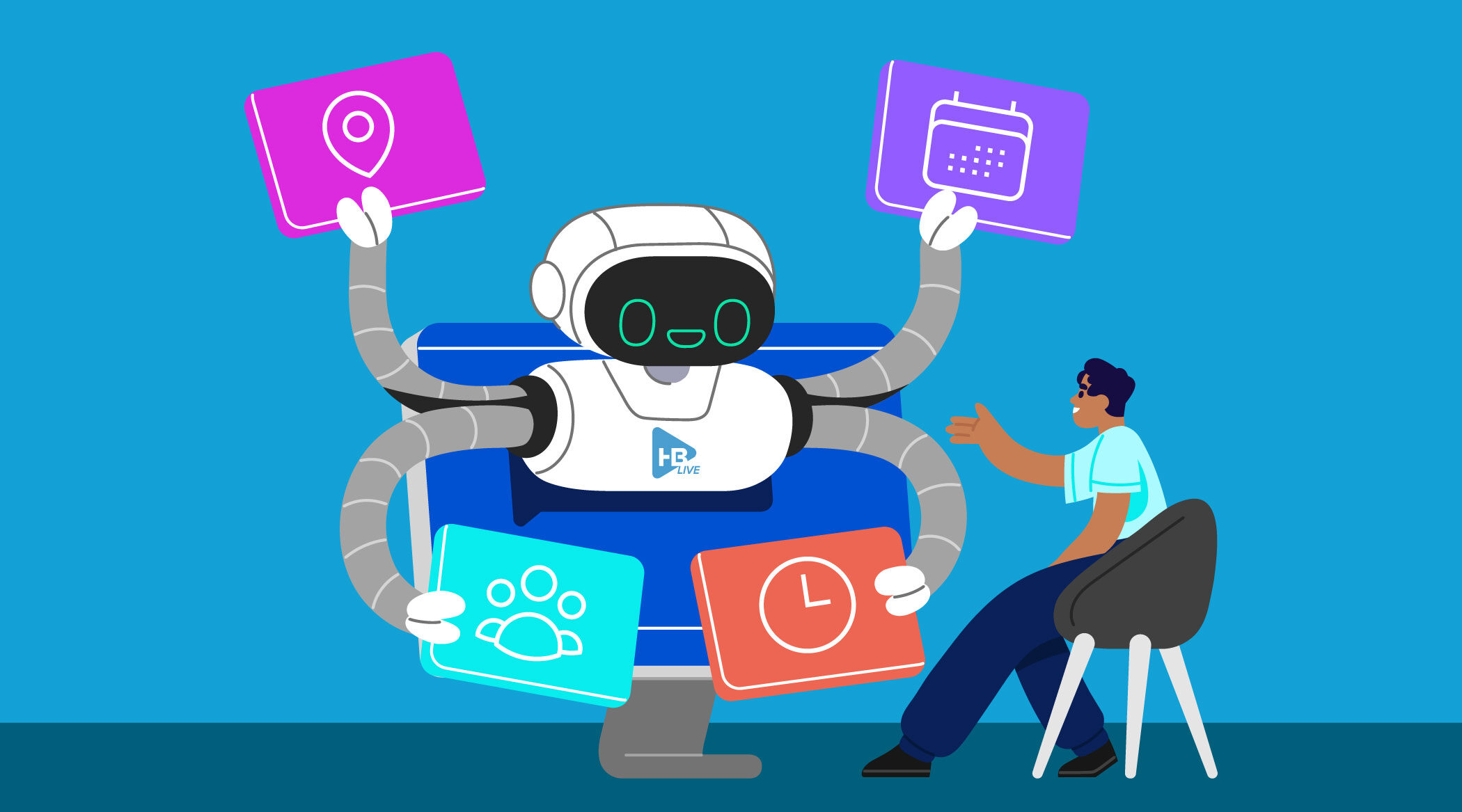
Chatbots and virtual assistants powered by AI may also become event staples, offering instant information, guiding attendees, or providing language translation services in international settings, all in real-time. This could greatly reduce the stress of event managers by reducing the number of questions and concerns being asked by the attendees.
Data-Driven Insights for Future Success
Post-event, AI might analyze feedback, social media activity, and attendee interactions to offer insights for future events. This could turn every event into a stepping stone for improving future gatherings, making them even better tailored and more successful. With everything from attendee feedback on social media to post-event surveys, AI can become your best friend for planning better events in the future.
Marketing and Promotion Reimagined
AI could also transform event marketing by predicting which platforms will yield the best engagement or by customizing ad content for different audience segments, ensuring events receive the attention you are looking for. It may also be able to create a wide variety of promotional images and content without the need for graphic designers to promote your event online.
Top AI Tools for Event Planners in 2026 (New Section)
To effectively integrate AI into your event strategy, choosing the right tools is key. Here are some of the most impactful tools available for 2026:
Chatbot Platforms (Drift, Intercom, Tars): These AI-driven chat platforms can provide real-time answers to attendee questions, handle FAQs, and integrate with your event registration system for smooth communication.
AI Content Generators (Jasper, Canva Magic Write): These tools help generate email campaigns, social media posts, session descriptions, and promotional material faster than ever, freeing up creative teams to focus on strategic messaging.
Personalization Engines (Grip, Swapcard): These platforms customize attendee agendas, suggest networking matches, and provide session recommendations — all driven by live behavioral data and preferences.
Event Analytics Tools (Zenus AI, Swoogo): These analyze attendance patterns, session engagement, and even emotional reactions through facial recognition (with consent), helping planners evaluate ROI and improve future events.
Implementing AI in Event Planning
Implementing AI in event planning can seem daunting, but it can be done starting now. While the tools are not deeply mature in relation to the events industry, it will continue to rapidly evolve.
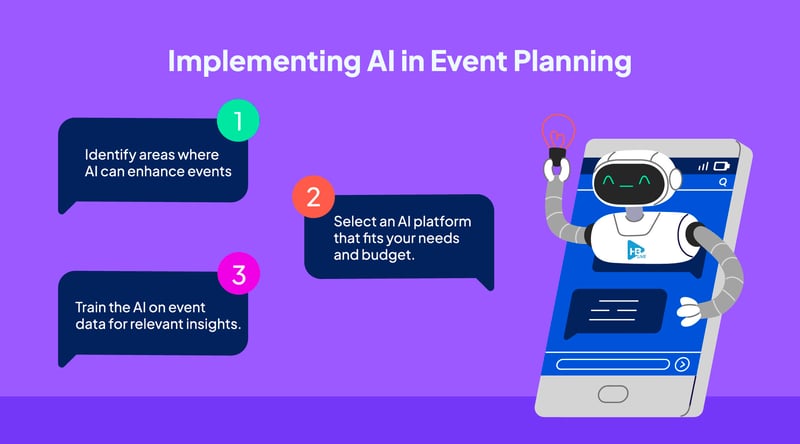
First, identify the areas where AI can be used to improve the event experience. This can include tasks such as registration, ticketing, and content creation. Next, choose an AI platform that meets your needs and budget. Finally, train the AI system on your event data to ensure it provides accurate and relevant insights.
Some popular AI tools for event planning include chatbots, event matchmaking algorithms, and personalized content recommendation engines. These tools can help event planners streamline their workflow, improve attendee engagement, and provide valuable insights into event industry trends.
Challenges and Ethical Concerns with AI in Events
While AI presents exciting possibilities, it also introduces some critical challenges and ethical responsibilities for event planners:
Data Privacy and Consent: Attendees must be informed about how their data is collected, stored, and used. Planners should ensure compliance with data protection regulations like GDPR and prioritize transparency.
Bias in Personalization: AI models trained on biased data could unintentionally exclude certain attendee groups or interests. Ensuring diversity in training datasets and monitoring recommendation fairness is essential.
Over-Automation and Loss of Human Touch: Too much automation risks making the event feel sterile or impersonal. The goal should be to enhance — not replace — human interaction.
Transparency About AI Use: Attendees should know when AI is being used, especially in communication or matchmaking. Clear disclosure builds trust and sets realistic expectations.
Human + AI: Finding the Right Balance
The most successful event experiences will come from a collaboration between human creativity and AI intelligence:
- Human Strengths: Emotional intelligence, storytelling, experience design, and strategic thinking are irreplaceable.
- AI Capabilities: AI excels at data analysis, automation, personalization at scale, and operational efficiency.
- Working Together: AI should handle the repetitive, data-driven tasks so that humans can focus on high-impact decisions and experiences.
- Avoiding Overreliance: Planners should use AI as an assistant, not a crutch — it should support creativity, not stifle it.
By maintaining a human-centric approach, event professionals can harness AI without compromising the emotional resonance of live experiences.
Getting Started with AI for Your Next Event
Not sure where to begin with AI? Start small and scale gradually:
- Start with a Specific Problem: Identify one pain point — like reducing check-in time or personalizing content recommendations.
- Pilot One Tool: Choose an AI platform aligned with your event goals and test it with a small audience or segment.
- Define Success Metrics: Measure performance using engagement rates, satisfaction scores, or time saved.
- Evaluate and Improve: Gather feedback, assess outcomes, and refine your approach for future events.
By focusing on clear objectives and manageable pilots, even small teams can begin benefiting from AI without major upfront investment.
Looking Ahead: Event Industry Trends
As we look to the future, AI’s integration into event production could help event producers with planning, management, exploring event venues, complaint handling, problem prevention, creativity, content, marketing, advertising and much more. What we can’t rely on it for is the focus on human experience.
AI might handle many things, the creativity, emotional intelligence, and strategic foresight of human organizers will continue to be what truly brings events to life. After all, events are for bringing humans together.
Conclusion
The future of event planning is bright, and AI will play a key role in that future. By implementing AI in event planning, event professionals can improve the event experience, increase efficiency, and gain valuable insights into event industry trends. Whether you’re planning a small meeting or a large conference, AI will help you create a memorable, organized and engaging event. So, don’t be afraid to explore the world of AI in event planning and start testing to discover the incredible impact it can have on your events.