What Is Sound Reinforcement?
Sound reinforcement is the process of capturing, processing, amplifying, and distributing live sound so an audience can hear it clearly. It is used for everything from presentations and meetings to concerts, performances, and live events.
A live audio system consists of connected components that handle different stages of the audio signal path. Sound typically starts at a microphone or playback device, passes through mixing and processing, is amplified, and then reaches the audience through loudspeakers.
Good sound quality means intelligibility and fidelity. Intelligibility refers to the ability to discern speech clearly. Fidelity is the accurate reproduction of the sound characteristics of the presenter, vocalist, and music. Volume, or loudness, is important in settings with lots of background noise, but don’t confuse a loud system with a quality system.
1. Capture the Sound With the Right Microphones
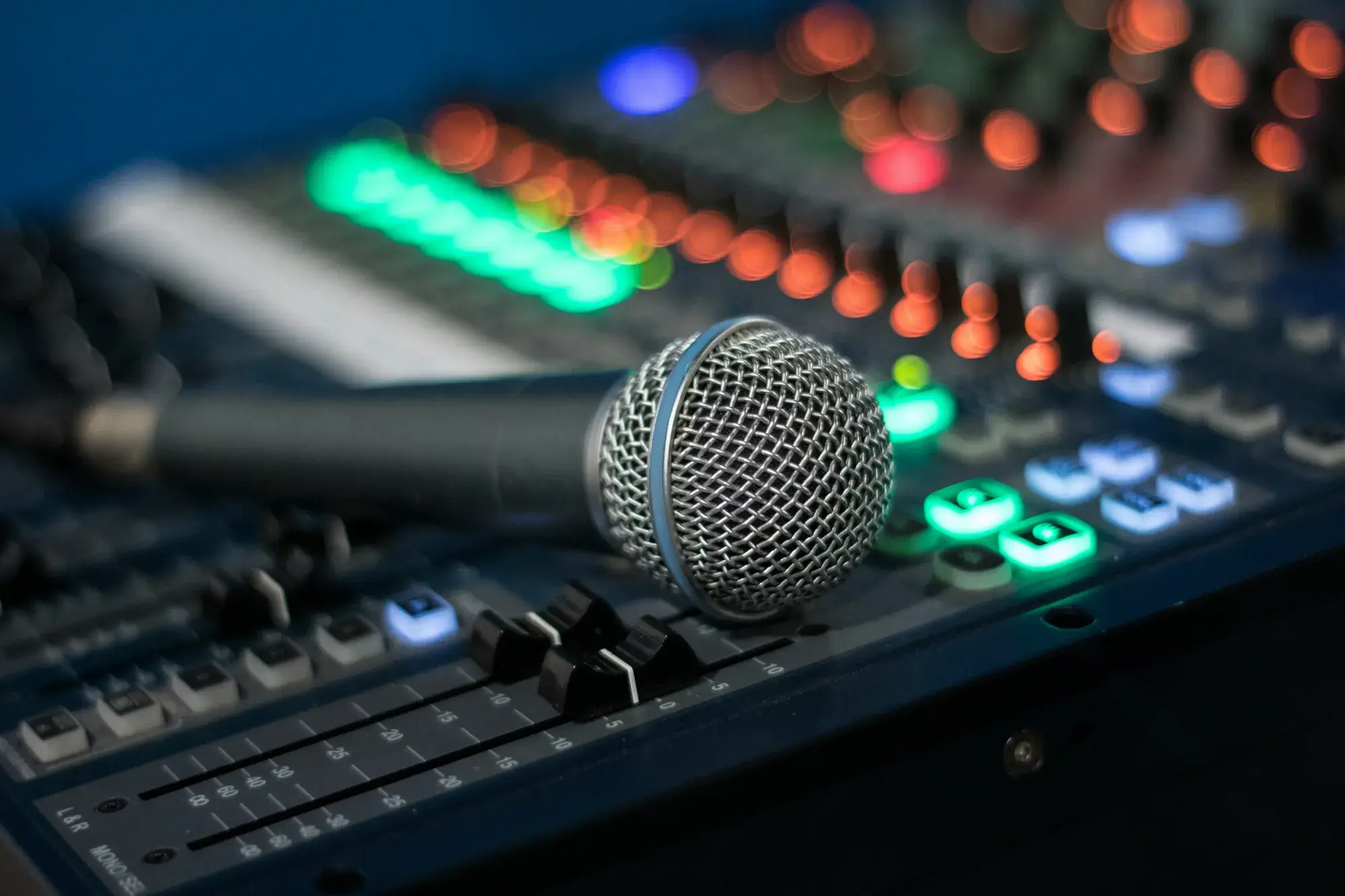
Microphones are where the sound reinforcement signal begins. They capture voices, instruments, and other live sounds and convert them into audio signals that can be processed by the rest of the system.
Good microphone selection depends on both the sound source and the environment. A microphone suitable for a loud performance may not be the best option for a quiet presentation or interview.
For clear audio, the goal is to capture the intended source cleanly while minimizing unwanted background noise. Choosing the appropriate microphone and positioning it correctly can improve clarity before the signal reaches any other part of the system.
Common Microphone Types and Characteristics
Handheld microphones are just that: something that the presenter or vocalist holds in their hand or places on a stand. It’s important to note that inexperienced presenters typically hold them too close to their mouths, which impacts the audio quality.
Lavalier microphones are small wearable microphones commonly attached to clothing. They provide a hands-free solution for presentations, interviews, lectures, and other situations where the speaker needs freedom to move.
Head-worn microphones are used for very active presenters or performers and can have the highest quality based on the features of the microphone capsule.
All of the microphones listed above can be wired or wireless depending on the production.
2. Mix and Process the Audio
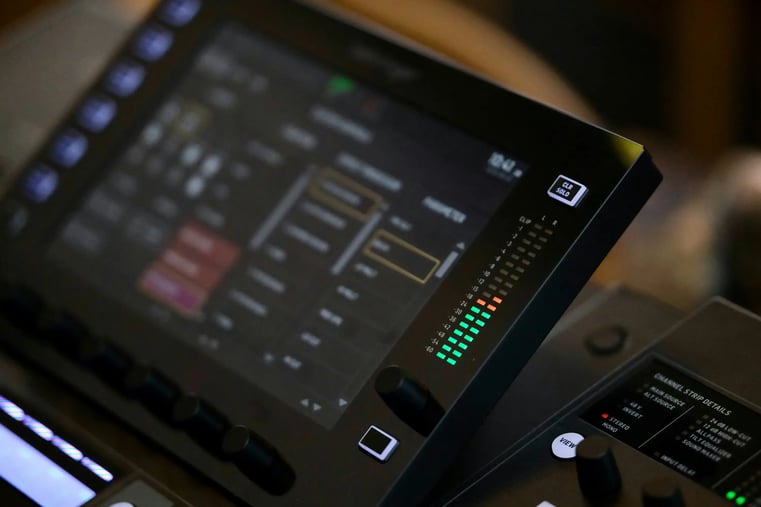
An audio mixer combines and balances signals from microphones and other audio sources. It allows an operator to control individual sources so that one microphone, instrument, or playback device does not unnecessarily overpower another.
Audio processing is used to improve clarity and control before the signal is amplified. Depending on the system, processing can include equalization, filtering, compression, and level adjustments.
Processing can also help manage common noise and echo problems. Background noise may make speech harder to understand, while excessive room echo can reduce intelligibility. Appropriate processing can help control these issues, although microphone placement, speaker positioning, and room acoustics are also important.
3. Amplify the Audio Signal
Amplification increases the processed audio signal to the level required by the output system. In systems with passive speakers, a separate power amplifier may perform this job. Powered speakers have amplification built into the speaker itself.
Within the overall audio signal path, amplification comes after the sound has been captured, mixed, and processed, and before it is reproduced for the audience.
The amount of amplification required depends on the system requirements and environment. Factors such as the size of the listening area, speaker configuration, required sound level, and type of content all affect how much amplification is appropriate. More power alone does not guarantee better sound.
4. Distribute Sound Clearly to the Audience
Sound distribution determines how effectively the final audio reaches people throughout the intended listening area. The objective is not simply to produce sound but to make it clear and usable wherever the audience needs to hear it.
At the audio output stage, loudspeakers convert the amplified electrical signal back into acoustic sound. Loudspeakers come in a variety of styles. Each event might require a different number and type of loudspeakers depending on the number of attendees, the length and width of the venue, and the type of content being presented.
Trust your professional audio team to select and set the correct type of speaker to ensure intelligibility and fidelity to the entire audience.
Simply turning the volume up is not the same as improving clarity. A good sound reinforcement system distributes audio appropriately instead of relying on unnecessary loudness.
5. Monitor and Control the System
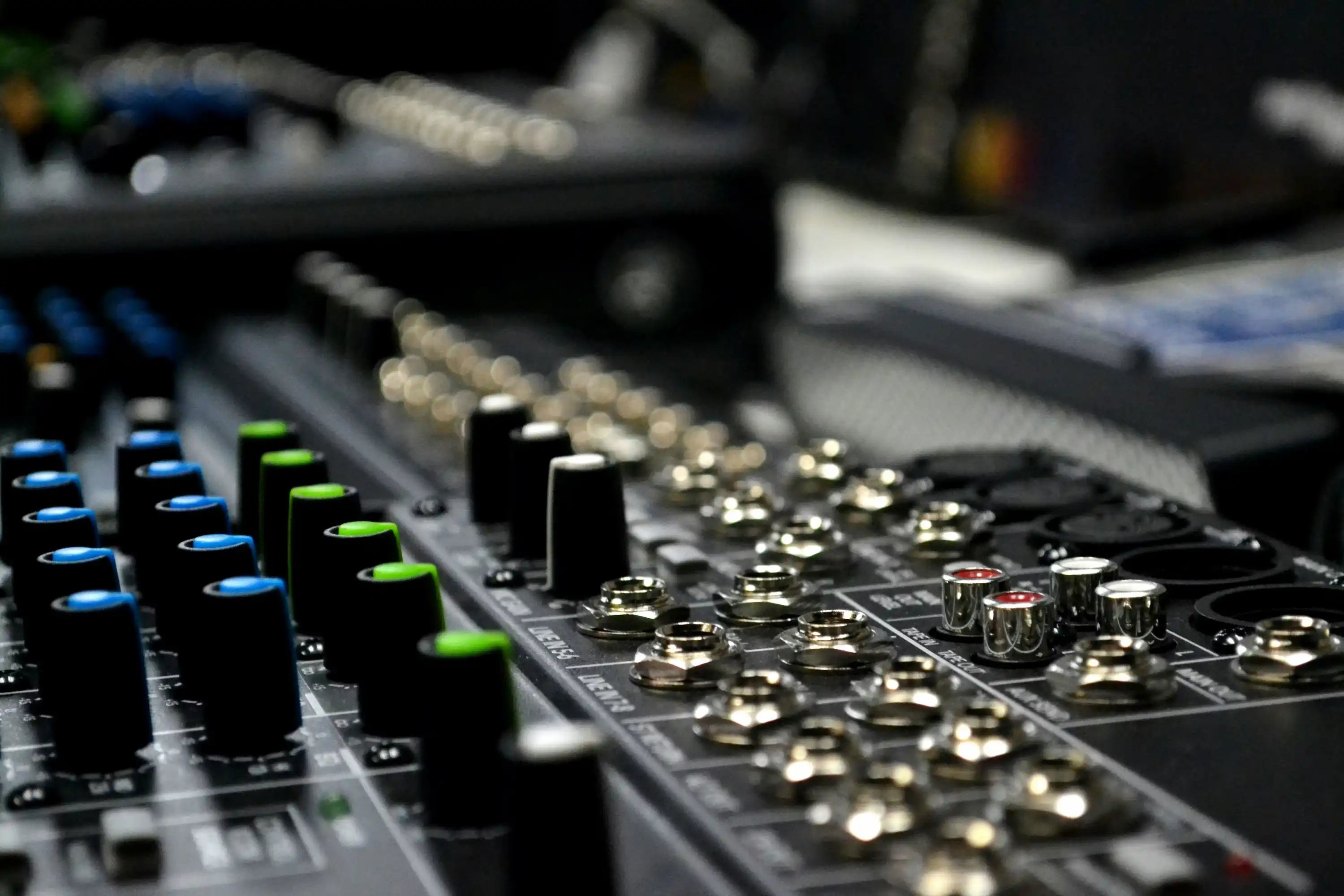 Audio monitoring helps operators understand what the system is producing and identify problems before or during live use. Monitoring levels and individual audio sources can reveal issues that might otherwise affect the audience experience.
Headphones are useful for checking individual signals and identifying problems such as unwanted noise, poor balance, or an incorrect audio source. They allow an operator to inspect parts of the signal path without relying entirely on the main speakers.
Effective system control should also be straightforward and reliable. Clear controls make it easier to adjust levels, mute sources, and respond to changing conditions while reducing the chance of mistakes during a live event.
What Makes a Sound Reinforcement System Great?
A great sound reinforcement system starts with clear sound. Intelligibility and consistency are usually more valuable than unnecessary complexity. The audience should be able to hear the intended content comfortably throughout the listening area.
Matched equipment is equally important. Microphones, processing, amplification, and output equipment should suit the environment and work effectively together. A weakness at one stage of the signal path can affect the final result.
Finally, reliable operation depends on compatible equipment, effective monitoring, and straightforward system control. When every part of the signal chain performs its intended role, sound reinforcement can deliver clear, consistent audio without making the technology itself the focus. If you're planning an event and want a system built around your space, explore HB Live's professional sound rental services.