Imagine stepping into an event where the atmosphere isn't just welcoming, but utterly breathtaking. The walls around you come alive with vibrant colors and dynamic images, immersing you in a world beyond your imagination.
Welcome to the world of live event production, where the convergence of technology and creativity turns ordinary gatherings into extraordinary experiences. Navigating the complexities of event technology can be overwhelming, with a myriad of options and innovations at every turn.
In this blog, we'll expose the tech and tools behind the magic. These are not just tools; they’re the paintbrushes and colors that we create unforgettable moments with. Whether you're an event professional, a technology enthusiast, or simply curious about the magic behind successful events, this blog showcases the intricate dance of light, color, and motion that brings an event to life.
Let’s jump in!
I-Mag: How Image Magnification Transforms Live Events
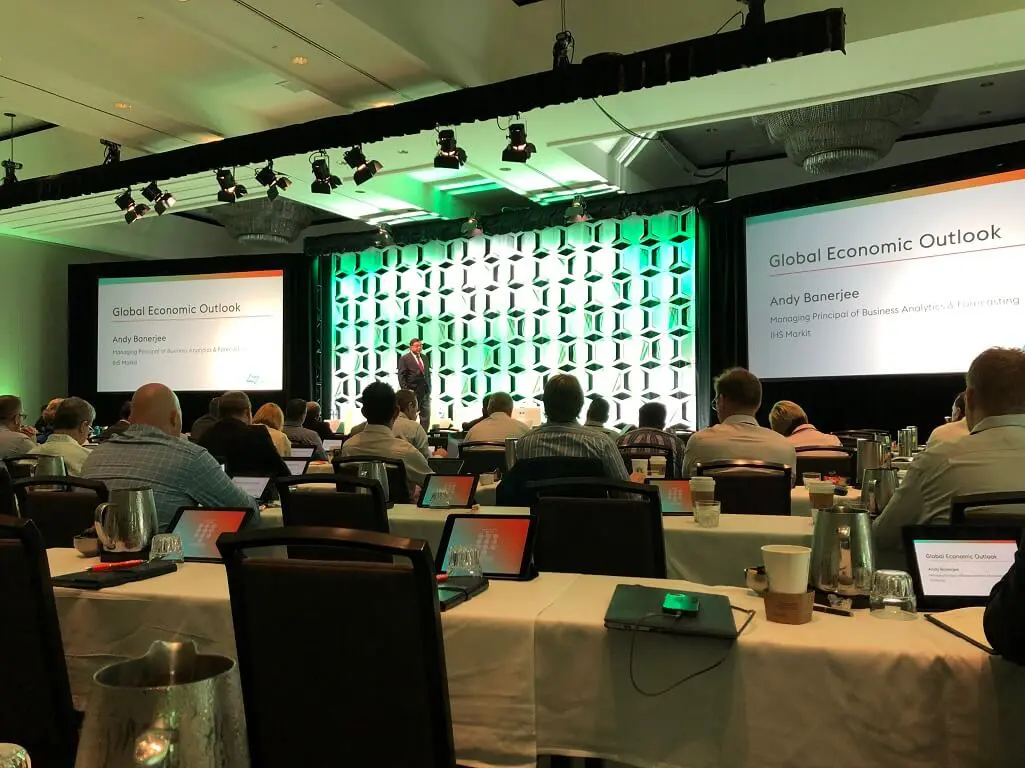
Have you ever attended a live event and found yourself captivated by the larger-than-life figures on the screens? This magic is the work of I-Mag—a clever acronym for 'Image Magnification.' It's a blend of cameras, projectors, and screens seamlessly working together to bring the stage action closer to you. This subtle yet powerful technology amplifies the live show experience, making it more immersive, if you're seated at the back.
 In large event spaces, I-Mag technology transforms distant speeches into up-close experiences. It bridges the gap between the speaker and the event attendees, magnifying live video feeds so that the presenters' energy, expressions, and gestures are visible to everyone.
When to use I-Mag depends on a few factors including; how intimate the setting is, the size of the venue and audience, and what the client is trying to accomplish. Our team specializes in producing a wide range of events, from conferences to graduation ceremonies and live music events. In these events, while we often have cameras for recording or streaming purposes, the live feed is not typically displayed on screen during the event.
On a recent project, the event venue we were in was a long, narrow room, with the stage placed against the shorter wall at the far end. Our approach: the first screens did not have I-Mag because the audience was close enough to the stage. However, the delay screens that were positioned further back did.
What IMAG Is And When You Should Use It
IMAG, or Image Magnification, refers to the real-time use of cameras and screens to enlarge what's happening on stage for audiences seated further away. Unlike a typical live stream, IMAG is crafted with intention—using multiple camera angles, switching, and framing techniques to support the live, in-room experience.
It's particularly valuable when:
- Your audience is spread out in a large room or auditorium.
- The speaker or performers need to connect visually with attendees seated far away.
- You're hosting hybrid events where in-person and remote audiences require parallel experiences.
IMAG isn't just about showing what's happening—it's about enhancing it.
Projection Mapping: Transforming Live Event Spaces into Visual Spectacles
Have you seen the Sydney Opera House transformed into a vibrant, living mural during Vivid Sydney? As it’s illuminated with an array of lights, colors, and intricate patterns, the iconic structure becomes a canvas for breathtaking digital art. Shapes and effects blend seamlessly with its physical form, creating a mesmerizing spectacle across its iconic sails. This stunning visual experience is achieved through the meticulous art of projection mapping.
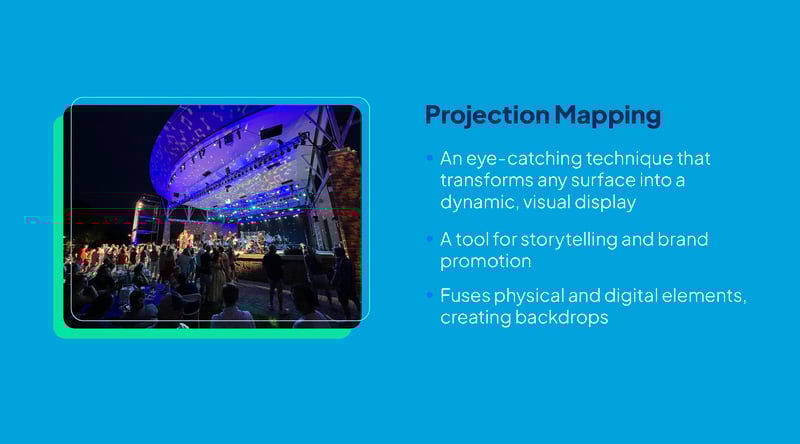
Projection mapping is an eye-catching technique that transforms any surface into a dynamic, visual display. Imagine the walls of a building, a plain stage backdrop, or even a simple conference room wall. With projection mapping, ordinary surfaces become vibrant screens, displaying anything from simple patterns to complex, story-driven visuals. This technology isn't just for adding flair; it's a tool for storytelling and brand promotion, making it perfect for various events like corporate gatherings, trade shows, or annual expos.
Projection mapping can revitalize bland spaces with brand-specific imagery. It can sync with music and even speech to animate stages and sets. It also allows event organizers to weave stories on the walls to further engage guests in the event's theme. Projection mapping fuses physical and digital elements, creating backdrops that dynamically interact with performances, speakers, and events.
Projection Mapping Explained: How It Works
Projection mapping goes beyond basic projection. It uses specialized software to map digital visuals onto three-dimensional surfaces—from buildings and walls to unconventional objects—making them come alive with motion and meaning.
Where it shines:
- Architectural facades and exteriors
- Stage backdrops and scenic elements
- Irregular surfaces like sculptures, cars, or domes
However, there are challenges to consider:
- Ambient light can reduce visibility—projection mapping thrives in controlled lighting.
- Precise projector placement is critical for alignment and image clarity.
- Surface texture can impact how visuals appear—flat, matte surfaces work best.
When executed correctly, projection mapping can completely transform a space without adding a single physical element.
Projection Mapping vs LED Walls
Both projection mapping and LED walls offer powerful visual storytelling tools, but their strengths differ — especially in how they interact with physical space.
The biggest distinction is this:
Projection mapping shines light onto an existing surface, such as a building façade, stage set, scenic element, or architectural structure. It uses projectors to illuminate and transform that surface visually.
LED walls, on the other hand, are the surface. They are modular physical structures made up of LED panels that emit their own light and create the image directly — they do not rely on projecting onto another object.
Projection Mapping:
- Ideal for creative storytelling, especially when working with existing architecture or physical stage builds.
- Transforms buildings, walls, ceilings, or custom scenic elements into dynamic canvases.
- Offers more fluidity in design and execution, as visuals can be precisely tailored to the contours of the structure.
- Sensitive to ambient light and surface imperfections — brightness and clarity depend on environmental conditions and projection quality.
Projection mapping excels when you want to animate or illuminate a large physical structure — such as a building exterior or architectural feature — particularly in darker environments.
LED Walls:
- LED walls are self-contained display structures made of modular panels.
- They emit their own light, making them exceptionally bright and crisp — even in daylight or outdoor conditions.
- Scalable and modular, with consistent output across multiple events.
- Higher upfront cost but often more durable, reusable, and predictable in performance.
LED walls are ideal when you need reliable brightness, high resolution, and consistent visual clarity, regardless of ambient lighting.
Use Cases:
- Use projection mapping for theatrical performances, architectural activations, corporate reveals, or immersive storytelling where you are transforming an existing structure — especially in controlled or darker lighting environments.
- Use LED walls for high-traffic trade shows, concerts, corporate presentations, or outdoor events where visual clarity, brightness, and impact are paramount.
In short: Projection mapping enhances a structure. LED walls are the structure.
LED Walls: Their Visual Impact in Live Events
Picture yourself at a graduation ceremony, where the entire backdrop of the stage is an expansive, dynamic display. As each graduate walks on stage, the screen behind them lights up with their achievements, photos, and congratulatory messages in bright, bold colors. You’re not just watching but experiencing the celebration, feeling a sense of awe and connection as the vivid visuals bring each story to life. A beautiful moment amplified by the use of LED walls.
An LED wall is a large, dynamic backdrop made up of smaller LED panels, used in various events to display videos, images, or graphics. These walls can be tailored in different shapes and sizes to fit the event's theme. LED walls transform live and in-person events into visually stunning experiences with their vibrant, high-resolution capabilities. These displays bring images to life with exceptional clarity, enhancing everything from corporate events with crisp branded videos to concerts with dynamic backdrops.
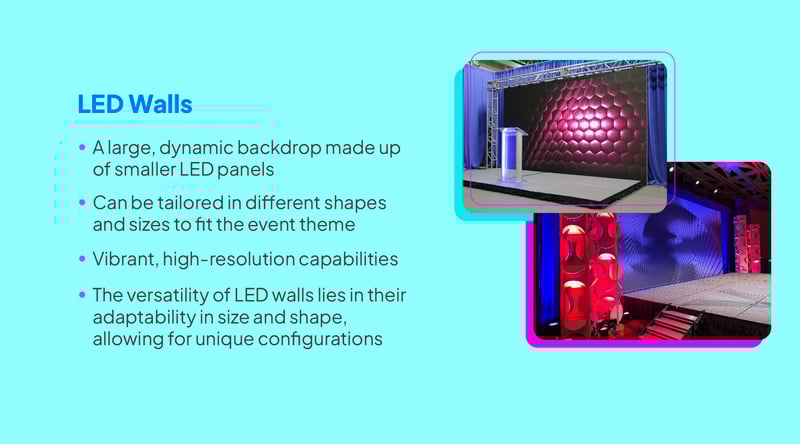
The versatility of LED walls lies in their adaptability in size and shape, allowing for unique configurations tailored to each event's theme. Imagine LED walls lining a fashion show runway, creating an evolving visual landscape, or encircling a trade show booth for a 360-degree immersive experience, the possibilities are endless.
In addition to their aesthetic appeal, LED walls can be utilized for event communication and branding. They effectively showcase sponsors, marketing and promotional material, and highlight key messages, engaging audiences while amplifying the event's theme.
Uplighting: The Art of Ambiance in Live Events
Uplighting is a key player in shaping the mood and atmosphere of live events. This subtle lighting technique has the power to transform venues. Used strategically, it can change a venue's look and feel to suit your event. Uplights are ground-supported LED fixtures that enhance the ambiance of an event space by casting a colorful glow on drapes, walls, and pillars. They are particularly effective for creating a desired mood or highlighting architectural features.
Warm uplighting can infuse a room with intimacy and closeness, while cooler tones can inject energy into launches or corporate events. Uplighting isn’t just about illumination though; it adds depth, highlights architectural features, and sets the thematic tone for your event.
Uplighting's versatility allows it to align with any event's color scheme and theme. Whether providing a soft color wash for an awards ceremony or customized effects in sync with your speakers, uplighting offers a range of possibilities. Integrating uplighting with other lighting types, like spotlights or motion lighting, creates a well-rounded visual experience, reinforcing the event's impact and professionalism.
Using LED Posters and Surface Projection to Create Dynamic Event
Imagine your event entrances or conference walls becoming an interactive digital canvas capable of displaying anything you can imagine. Pretty cool, right?! There are two ways you can bring this immersive experience to your events –LED Posters and Surface Projection.
LED posters are a modern twist on traditional signage, designed to display dynamic content that can be updated in real time. These vibrant, eye-catching screens are perfect for showcasing videos, images, or text, grabbing the attention of passersby. For instance, imagine walking through a trade show where each booth features an LED poster flashing the latest product demos or special offers, drawing you in with their bright, engaging displays.
Surface projection takes event visuals to a new level by casting images or videos onto different surfaces, turning them into interactive branded spaces. This technology can project onto walls, floors, or even irregularly shaped objects, creating immersive environments. Picture attending a product launch where the walls of the venue come alive with moving images and product stories, transforming the entire space into a captivating narrative about the brand.
These tools offer event planners innovative ways to present key branding elements, making them not only visible but also interactive. LED posters and surface projection merge aesthetics with functionality, turning branding into a dynamic experience.
The Subtle Elegance of Moving Lighting in Live Events
Moving Lights, commonly known as “Movers”, refers to advanced lighting fixtures with the ability to tilt, pan, and rotate, offering dynamic control over the lighting direction and patterns. These versatile lights can create a range of effects from spotlighting key moments to washing the space with colors and shapes.
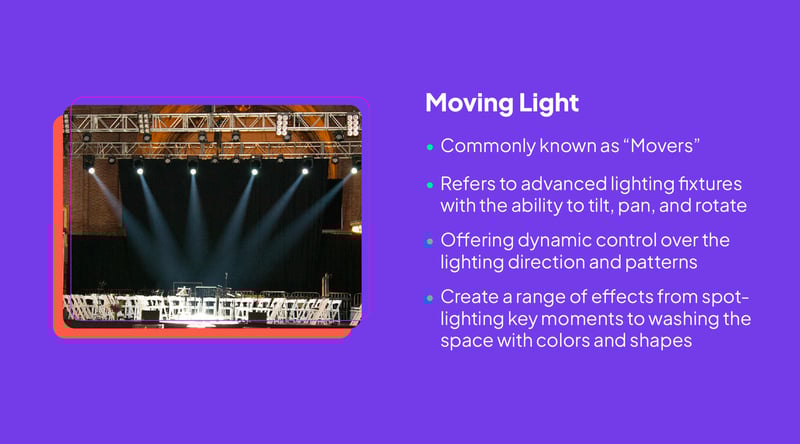
From keynote speakers being illuminated as they take the stage to entire rooms lit up in company colors during a moment of celebration, motion lighting adds a dynamic and professional atmosphere to events.
However, subtlety is the name of the game for most events. In the right setting, use these to create a dazzling light show, but most times simply adding layers of visual interest that enhance the space and the event's narrative. For instance, in a corporate conference, gentle moving lights can create a backdrop that evolves throughout the sessions, keeping the environment visually stimulating without being distracting. One of the key strengths of subtle motion lighting is its versatility and ability to be programmed to match your event's color scheme, tempo, and style.
Live Event Production Experts: We Bring Your Vision To Life
Live event production is always changing, and with technologies like I-Mag, projection mapping, LED walls, and more, you can craft unforgettable experiences. These tools are key in transforming spaces, captivating audiences, and boosting your event's impact. They also make for great event content.
Our team excels in making every aspect of your events flawless and visually extraordinary. We do more than supply equipment; we provide comprehensive planning, design, and day-of-event support to make your event a standout success.
Looking to create events that truly connect with your audience? Contact our team today.